Volunteer Action in the Herpetological Reserve
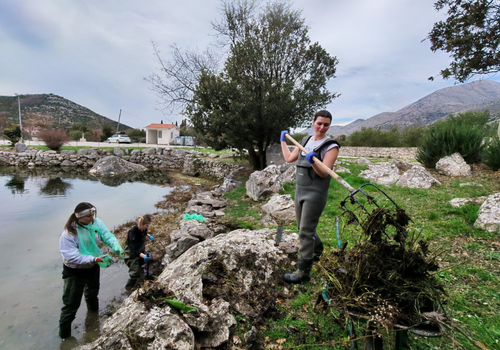
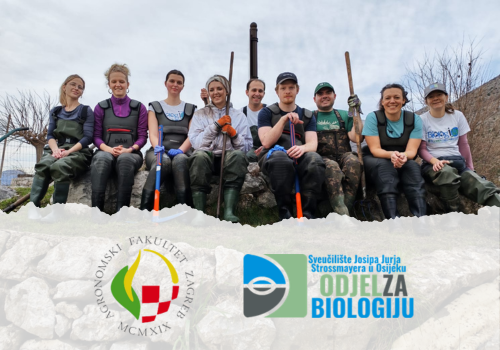
A volunteer action was carried out in the herpetological reserve in Majkovi to clean and restore a pond, in collaboration with several institutions and projects working together to preserve freshwater habitats in the south of Croatia. The activity once again demonstrated the importance of cross-sector collaboration for effective nature conservation.
Experts from Josip Juraj Strossmayer University of Osijek – Department of Biology, Department of Quantitative Ecology, led by Assoc. Prof. Dr. Olga Jovanović Glavaš, participated in the action, along with representatives of the LIFE for Mauremys team from the Faculty of Agriculture, University of Zagreb – Department of Fisheries, and the EkoStres project led by Prof. Dr. Marina Piria, under the coordination of Assoc. Prof. Dr. Dragica Šalamon.
Part of the equipment needed for the work was provided by the LIFE Contra Ailanthus project, implemented by the Public Institution for Management of Protected Areas of Dubrovnik-Neretva County – also the manager of the herpetological reserve and a partner in our project.
Habitat Restoration and Application of Innovative Methods
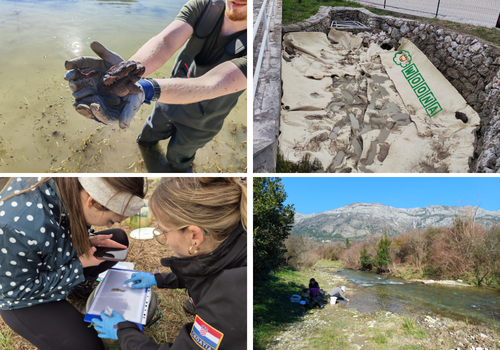
During the action, the pond in Majkovi was cleaned, with a particular focus on removing excess aquatic vegetation that could negatively affect habitat quality for target species. One of the methods applied was wool felt mulching – a technique in which part of the water surface is covered to reduce light penetration, preventing the excessive spread of invasive aquatic plants. This method represents an ecologically friendly approach to vegetation control without the use of chemicals.
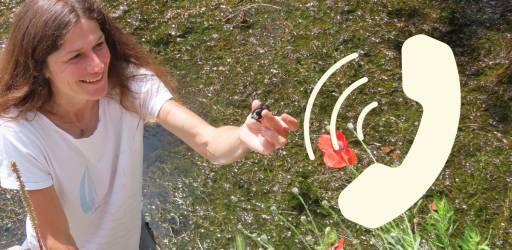
The effort was quickly rewarded – a newt was observed swimming in the restored area of the pond, freed from excess vegetation, demonstrating the importance of such interventions for the conservation of amphibians and other organisms associated with freshwater habitats.
Field Research and Control of Invasive Species
In addition to practical work, field research was conducted. Experts from the Department of Fisheries checked whether invasive California trout were reproducing, as the presence of non-native fish species can significantly impact native populations.
This integrated approach – combining practical habitat management measures with scientific monitoring – is crucial for the long-term conservation of herpetofauna in Dubrovnik-Neretva County.
Working Together to Preserve Pond Turtles and Their Habitats
The action in Majkovi is part of a broader effort to restore and improve habitats for the Balkan Terrapin (Mauremys rivulata), as well as many other species sharing the same habitats. Collaboration with the academic community and other LIFE projects further strengthens the implementation of activities and promotes the exchange of knowledge and experience.
We thank all participants for their engagement and contribution – through joint efforts, we are creating healthier and more resilient ecosystems for future generations.