Restoration of Ponds in the “Lokve u Majkovima” Herpetological Reserve
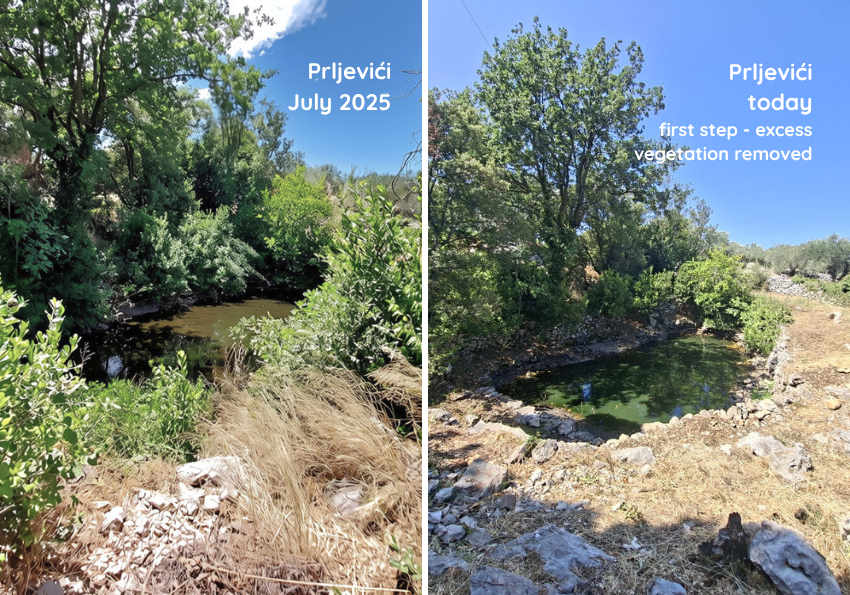
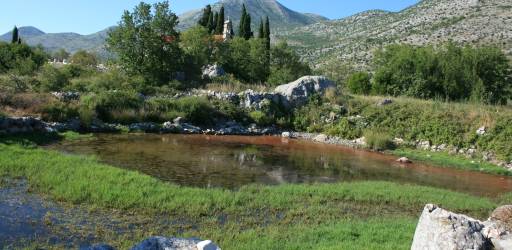
Restoration works are currently underway on ponds in the hamlets of Prljevići and Zabrežje within the “Lokve u Majkovima” Herpetological Reserve. These ponds represent one of the most important habitat types for the Balkan terrapin, as well as for numerous amphibian species, aquatic invertebrates, and other organisms that depend on small freshwater ecosystems.
Ponds are an integral part of the Mediterranean landscape and play an important role in biodiversity conservation. However, without regular maintenance, they gradually become overgrown, filled with sediment and organic material, and lose their ecological function. Such degraded water bodies provide fewer suitable conditions for native species, while disrupted ecosystem balance may favour, for example, the excessive spread of invasive species.
The aim is not only to restore individual ponds but also to ensure functional and interconnected freshwater ecosystems where numerous native species can thrive, while increasing the resilience of these valuable small water bodies to future pressures and environmental changes. To improve habitat quality and connectivity, various activities have already been implemented through the LIFE for Mauremys project. In the hamlet of Zabrežje, a tunnel was constructed beneath the road to enable safer movement of Balkan terrapins between the pond and nearby nesting sites in gardens, reducing the risk of road mortality. At certain locations, excessive aquatic vegetation and invasive aquatic plants have also been controlled through shading with wool felt and manual removal, preserving open water surfaces and improving conditions for native species.
Before the restoration works began, expert surveys were carried out. Hydrogeological studies provided a better understanding of pond functioning and helped determine the most appropriate restoration approach, while sediment analyses were used to assess its composition and define the appropriate method of disposal after removal. In this way, all interventions are based on scientific data and carried out while respecting the natural characteristics of this valuable area.
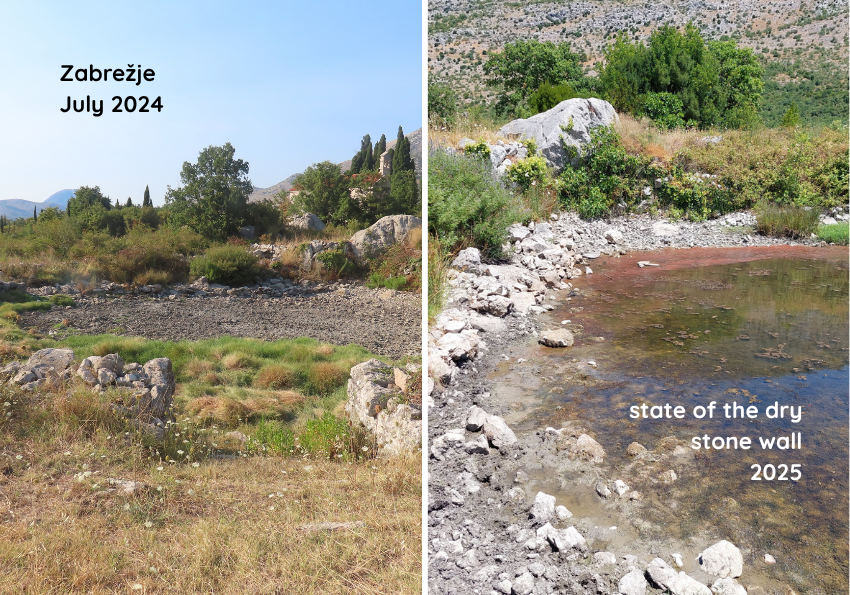
The restoration itself is being carried out according to a predefined plan and following an assessment of the condition of each individual pond. The goal is not the complete removal of vegetation or alteration of the natural appearance of the habitat, but rather the restoration of its functionality while preserving important natural features. Only excess sediment and vegetation are removed, while shallow areas of the ponds and parts of aquatic vegetation that provide important shelter, feeding areas, and breeding sites for numerous organisms are preserved. Collapsed sections of the dry-stone walls surrounding the ponds are being restored to maintain their stability and original appearance. In addition to being an important part of the cultural heritage of the area, dry-stone walls provide shelter and favourable microhabitats for many species of reptiles, amphibians, invertebrates, and other organisms, further contributing to the biodiversity of the reserve.
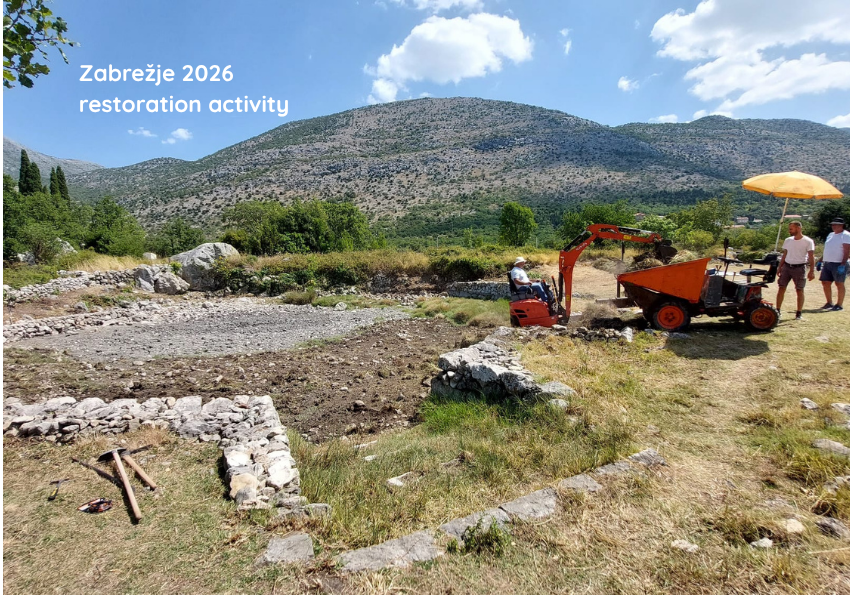
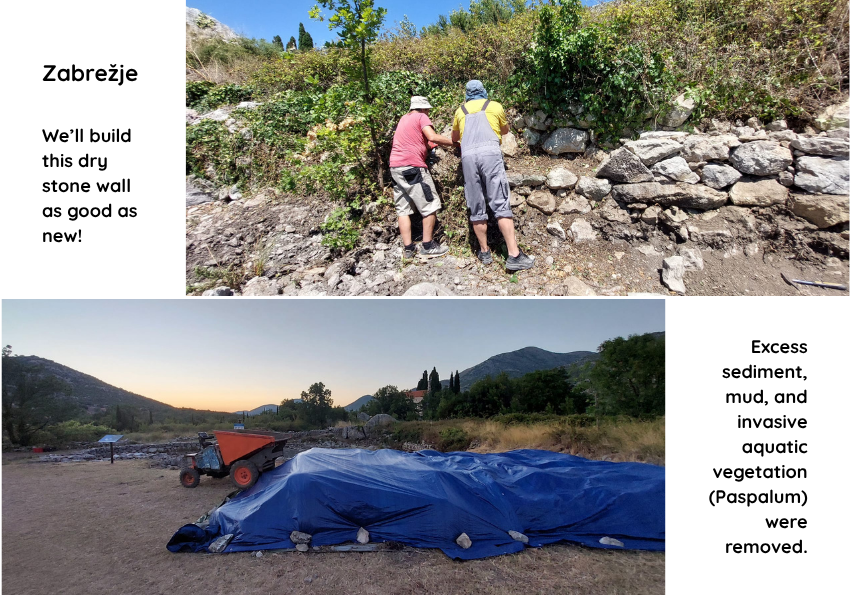
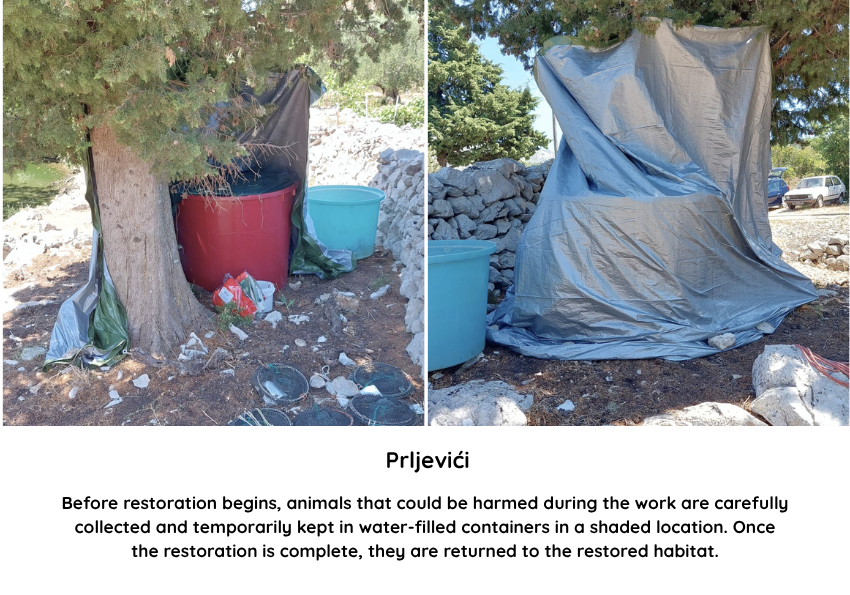
Special attention is given to protecting plant and animal species during the restoration works. Interventions are carried out during periods when water levels are at their lowest and when disturbance to the life cycles of amphibians and other organisms is minimal. All equipment used in the field undergoes appropriate cleaning and disinfection procedures to prevent the introduction of invasive species and pathogens into restored habitats.
Pond restoration is not a one-time “cleaning” activity, but a complex process involving planning, expert analyses, careful implementation of works, and monitoring of effects to ensure long-term habitat improvement. Restored ponds will be more resilient to the negative impacts of climate change, require fewer future interventions, and provide better conditions for the survival of the Balkan terrapin and many other species that depend on well-preserved Mediterranean freshwater ecosystems.
The restored ponds will also contribute to preserving the distinctive landscape of the herpetological reserve and create a higher-quality and more pleasant environment for local residents and visitors. These interventions represent an important step towards the long-term conservation of the “Lokve u Majkovima” Herpetological Reserve and its exceptional biodiversity.